
Alzheimer's Disease: A Key to Remembering
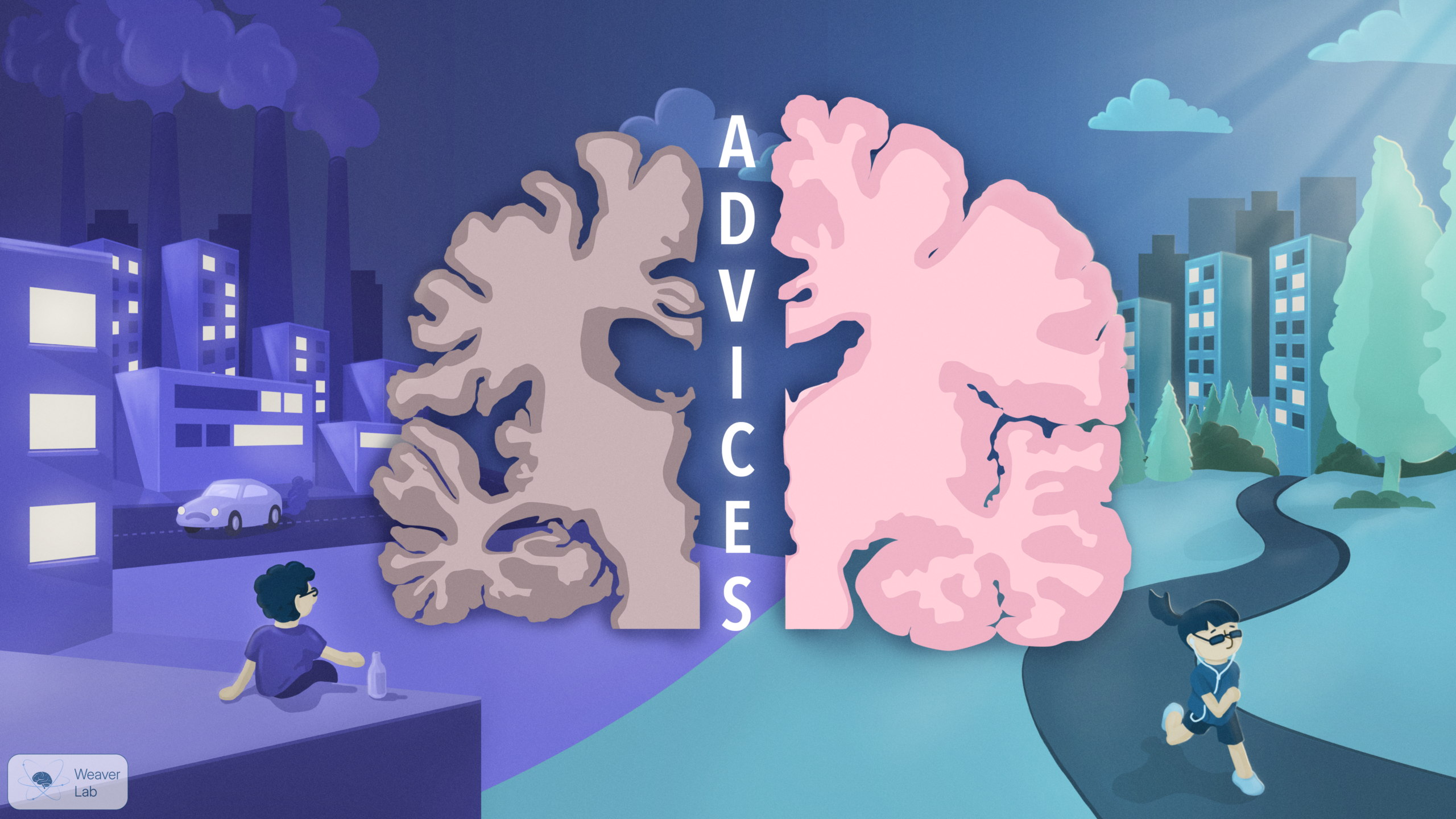
ADVICES: A key to remembering 14 risk factors for Alzheimer’s disease that you can start avoiding today. Image credit: Anthony Bortolin and Heidi Herbawi.
By Meagan Mulcair and Donald Weaver
Alzheimer’s disease (AD) is the most common type of dementia, afflicting more than 57 million people around the world today. This number is only increasing as populations age. Living with AD means facing gradual worsening of thinking ability and memory over time, affecting daily life.
Making a drug for AD is still a work in progress, and the road to a cure remains long and bumpy. In the meantime, taking steps to ward off Alzheimer’s disease and avoid getting it at all is the next best thing—and is surprisingly possible.
Age is associated with Alzheimer’s disease, but getting AD is not a normal part of aging. Many of the real risks associated with AD are actually linked to everyday routines. Just as altering your lifestyle can reduce your risk for cancer or heart attacks, the same is true for Alzheimer’s disease.
In 2024, a group of international experts called the Lancet Commission highlighted 14 modifiable risk factors for dementia. They showed that by avoiding these risks, your chance of ever developing AD or a related dementia could be reduced by almost half.
Remembering 14 items can be a challenging task. To make things easier, we are introducing ADVICES: a helpful acronym that lays out our advice for avoiding AD. Each letter represents two of the 14 risk factors: Air pollution, Alcohol abuse, Depression, Diabetes, Vision loss, Vascular disease, Impaired hearing, Inactivity, Concussion, Cholesterol, Excess weight, Education limitations, Smoking, and Social isolation.
A – Air pollution; Alcohol abuse
People exposed to greater levels of air pollution tend to have a higher risk of developing dementia over time. Prolonged exposure to traffic-related pollution and fine particulate matter (PM2.5) can cause inflammation and affect cardiovascular health, which increases the risk of AD. Using air purifiers, checking air quality alerts, and avoiding heavy traffic where possible can all reduce this risk.
Alcohol abuse poses a risk for AD by damaging the brain directly, contributing to inflammation, and impairing nutrition (particularly thiamine/vitamin B1). It can also increase the risk of stroke, hypertension, and other vascular diseases, which can all further increase dementia risk. For a healthier brain, drinking alcohol in moderation, or better, completely avoiding it, is best.
D – Depression; Diabetes
People with a history of depression—especially persistent or recurrent depression—are more likely to develop dementia later in life than others. Identifying and treating depression is now considered an important part of dementia risk reduction.
Diabetes is one of the strongest known modifiable risk factors for AD. People with diabetes have a substantially higher risk of developing Alzheimer’s disease and vascular dementia compared with people without diabetes. Preventing and managing diabetes may help to reduce your risk for developing AD.
V – Vascular disease; Vision loss
Vascular disease can damage blood vessels which can reduce blood flow to the brain and contribute to small strokes and other brain injuries. These in turn can lead to AD and other dementias. Vascular disease can be independent or co-occur with other risk factors such as diabetes and smoking.
Vision impairment, particularly untreated vision loss, is now recognized as a significant risk factor for AD, likely due to reduced visual sensory stimulation of the brain. Taking care of eye health can also help support healthy brain function.
I – Impaired hearing; Inactivity
Multiple studies have confirmed that people with impaired hearing, or hearing loss, have a higher risk of dementia and AD than those with normal hearing. Using hearing aids can help lower this risk.
Inactivity and lack of physical exercise are manageable risks for AD. Regular exercise is vital for improving blood flow and reducing inflammation, both of which support brain health. Aiming for just 30 minutes of moderately intense exercise each day through walking, strength training, and engaging in active hobbies is a great way to improve overall health and brain function.
C – Concussion; Cholesterol
Concussion, especially repetitive head trauma, is a well-recognized risk factor for AD. We can lower this risk by taking steps to prevent falls and wearing helmets and seatbelts where appropriate.
Cholesterol can increase the risk of AD, particularly elevated LDL or “bad” cholesterol in midlife (ages 40-65). Maintaining healthy cholesterol levels is beneficial for overall brain health. This can be managed through exercising regularly, maintaining a healthy weight, eating a healthy Mediterranean-style diet, and treating high cholesterol.
E – Excess weight; Education limitations
Excess weight or obesity, especially in midlife, contributes to brain inflammation, vascular problems and diabetes, and is a recognized risk factor for AD and other dementias. Maintaining a healthy weight is an important part of any broader dementia-prevention strategy. Eating healthily and staying active are sure ways to reduce the risk of AD.
Education helps to develop stronger brain connections and cognitive skills, helping to armour the brain against AD. Education limitations can hinder this process, and may increase the likelihood of developing AD. By engaging in new activities, solving puzzles, and learning new skills (e.g., learning a new language), the risk for AD can be lowered in fun and exciting ways. Lifelong learning is key to supporting the brain’s ability to handle age-related diseases.
S – Smoking; Social isolation
Smoking of all kinds directly exposes the brain to harmful chemicals and worsens brain health. Taking steps to quit smoking and limiting exposure to second-hand smoke can help combat AD.
Social isolation, arising from infrequent social contact or a limited social network, is associated with poorer cognitive health and AD. People who remain socially active through regular interactions with family and friends, participation in community groups, and volunteer activities, tend to have a lower risk.
Much about Alzheimer’s disease can seem beyond our control, but hope and empowerment are within reach. Our best advice is to follow ADVICES and meaningfully reduce your risk of AD through positive lifestyle changes today, while enjoying a healthier, better quality of life.